
Autopilot
Skip to mentor profile

Grand Slam mentor 02 / 05

SEO and local visibility

Lewis Vandervalk

He brings a builder's mind to the work of getting local businesses found and chosen.

Lewis came to marketing through farm work, construction, mechanical engineering, and a family bet on learning something completely new. He later tested that knowledge inside a junk removal company he co-founded. His SEO advice is practical for a reason: he has always cared less about the ranking screenshot than whether the right customer calls.

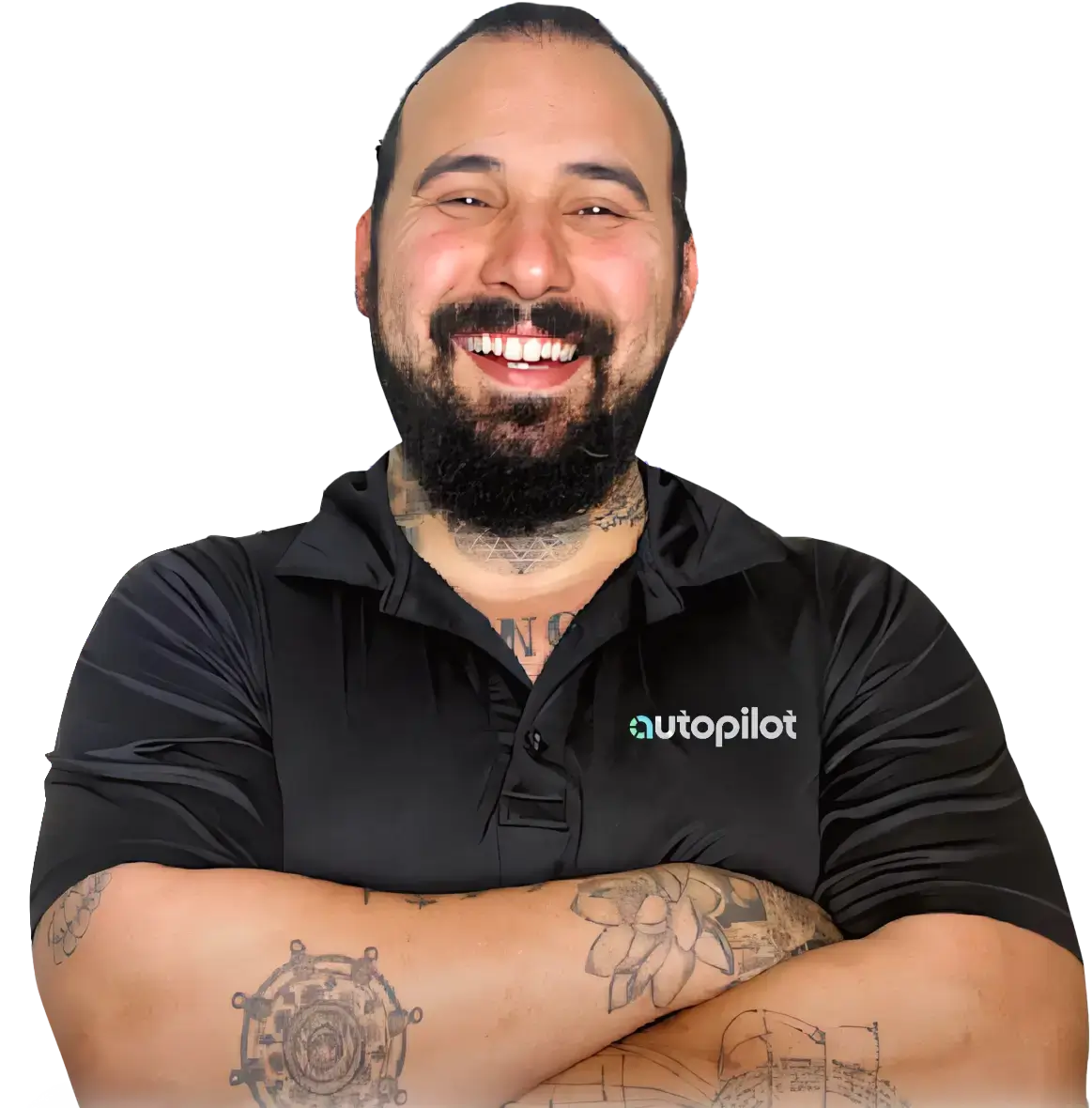
Lewis Vandervalk, founder of Blue Crocus Solutions
Blue Crocus Solutions • Co-founder, Integrity Junk RemovalBuilder with a mechanical engineering degree, agency founder, and junk removal co-founder
2019the year Lewis founded Blue Crocus Solutions
CAD $10Kthe family training investment he recounts
2021the year he co-founded Integrity Junk Removal
2 sidesagency strategy and a real operating business

The SEO expert whose first domain was misspelled.

Lewis's story works because the beginning is so human. He did not emerge from a marketing department with a vocabulary full of acronyms. He came from the trades, chose to become a student again, made an embarrassing first mistake, and kept learning until local service owners trusted him with the part of the business that makes the phone ring.

01

The builder before the marketer

Farm work, roofing, concrete, pools, then mechanical engineering.

Lewis grew up on a farm and went straight into physical work after high school. He roofed, hung and finished drywall, worked concrete, and spent years installing pools. Later he earned a mechanical engineering degree. Long before he thought about search rankings, he understood tools, weather, schedules, customers, and the pride that comes from work another person can see when the day is done.

That background matters in a room full of home-service owners. Lewis does not treat a contractor as a generic lead-generation category. He understands that every page and promise eventually meets a crew, a truck, a driveway, a margin, and a homeowner deciding whether the business feels trustworthy.

02

The family bet

They traded a bathroom renovation for an education no one could guarantee.

Lewis says August 1, 2019 was essentially the first day he learned what SEO and digital marketing really were. He and his wife had saved for a bathroom renovation. He persuaded her to redirect roughly CAD $10,000 into a serious end-to-end marketing program instead. It was not a casual online course purchase. It was family money and a decision that had to become useful.

Then he bought his first domain and spelled it wrong. The future SEO specialist had to contact the registrar and ask for a refund. The mistake could have become evidence that he did not belong. Instead, it became the first story in years of deliberate learning: podcasts in the spare minutes, technical training, coaches, mentors, client work, and one more useful idea tested after another.

03

Inside a real junk business

When a prospect declined the website, Lewis helped build the company instead.

In 2021, a local junk-removal operator approached Lewis for website and SEO help, then decided against the scope and cost. Lewis and a university friend looked more closely at the opportunity and chose to start a junk removal company themselves. His partner handled day-to-day field operations. Lewis handled the website, content, SEO, backlinks, networking, public relations, and lead generation.

Integrity Junk Removal & Demolition gave Lewis something an agency case study rarely can: a live view of how a local market responds. He worked community relationships, local media, organic search, and contractor connections. He watched individual service pages create opportunity and learned how demolition, commercial work, and a mix of organic and paid channels could smooth the limits of a smaller market.

As both businesses grew, the partners made a disciplined choice. Lewis kept Blue Crocus, the company he saw as his long-term work, while his partner kept Integrity. The split reinforced one of his most useful lessons for owners: focus is not a lack of ambition. It is how a good thing gets enough attention to compound.

04

From student to teacher

The deeper his expertise became, the less interested he was in magic tricks.

Lewis teaches search in plain language. Google wants to return the most useful answer for a specific person in a specific place. A website does not rank as one undifferentiated object; pages earn relevance around actual services and actual questions. Authority comes from consistent business information, useful local relationships, honest links, clear structure, and the patience to keep doing the work after the novelty disappears.

He calls some of that repetition 'digital ditch digging.' The phrase fits. Good local SEO is often unglamorous: build the appliance-removal page, answer what preparation requires, add real photos, connect related pages, earn the local citation, check indexing, measure the calls, update what has gone stale. Lewis also says he turns away businesses that are too early to responsibly support ongoing SEO. That willingness to say 'not yet' is part of why his yes carries weight.

What most SEO pitches leave out

Compounding visibility is built with useful work, not a bag of tricks.

Lewis will not promise that a pile of generic AI articles, bulk backlinks, or one redesigned home page will make a business dominant. Search engines change. Competitors move. A page still has to deserve the customer it is asking for. That means first-hand answers, specific services, clear local relevance, real proof, sound technical structure, and authority built in places that make sense.

He also understands investment timing. An owner can do lasting damage by buying an expensive monthly strategy before the fundamentals, cash flow, and service delivery can support it. The right plan should match the market and the stage of the business, then be measured by calls, leads, and customers rather than activity alone.

Search strategy that survives contact with the real world.

Lewis teaches owners enough of the system to make good decisions, direct good work, and recognize when an agency report is describing motion instead of progress.

01

Service-page and site architecture

Turn the services customers actually search for into a clear page system. Build depth around appliances, furniture, hot tubs, estates, commercial work, demolition, and the questions that help a customer choose.

02

Local authority that makes sense

Use citations, chambers, partners, community organizations, local press, relevant directories, sponsorships, and earned links to show that the business is a real participant in the place it serves.

03

Useful content in the age of AI

Bring jobsite knowledge, photos, objections, prices, preparation details, and real customer questions to the draft. Let AI help organize the thinking, then make the final answer more specific and more human than anything generic can produce.

04

Technical foundations without the fog

Understand headings, metadata, schema, internal links, indexing, duplicate content, business information, tracking numbers, and the difference between what happens on a page and the trust signals that happen elsewhere.

05

Measurement and responsible timing

Connect rankings and traffic to calls and leads. Choose a sustainable cadence. Know when to invest, what to ask a provider, and when the honest recommendation is to build more operational foundation first.

Six months of live access

Turn search demand into a build list you can own.

Lewis's sessions give members the mental model behind the tactics. That makes the next service page, citation, article, link, or agency conversation easier to evaluate long after class ends.
  • Choose the services and questions that deserve dedicated pages in your market.
  • Audit whether each important page is specific, useful, connected, and indexable.
  • Find local authority opportunities that are legitimate for your business.
  • Use AI as a structured assistant while keeping lived expertise in the final work.
  • Tie the plan to calls and leads, then choose a cadence the company can sustain.

Watch, read, and hear more from Lewis.

This profile was built from first-person interviews, public business material, and the work Lewis has shared in the field.

Meet the rest of your Grand Slam coaching team.

Five mentors. Thirty live classes. One complete growth system.

Put this much hard-won experience in your corner.

Meet with the team, see whether the program fits your business, and leave with a clearer picture of what comes next.