Autopilot
Skip to mentor profile

Grand Slam mentor 01 / 05

AI, systems, and growth

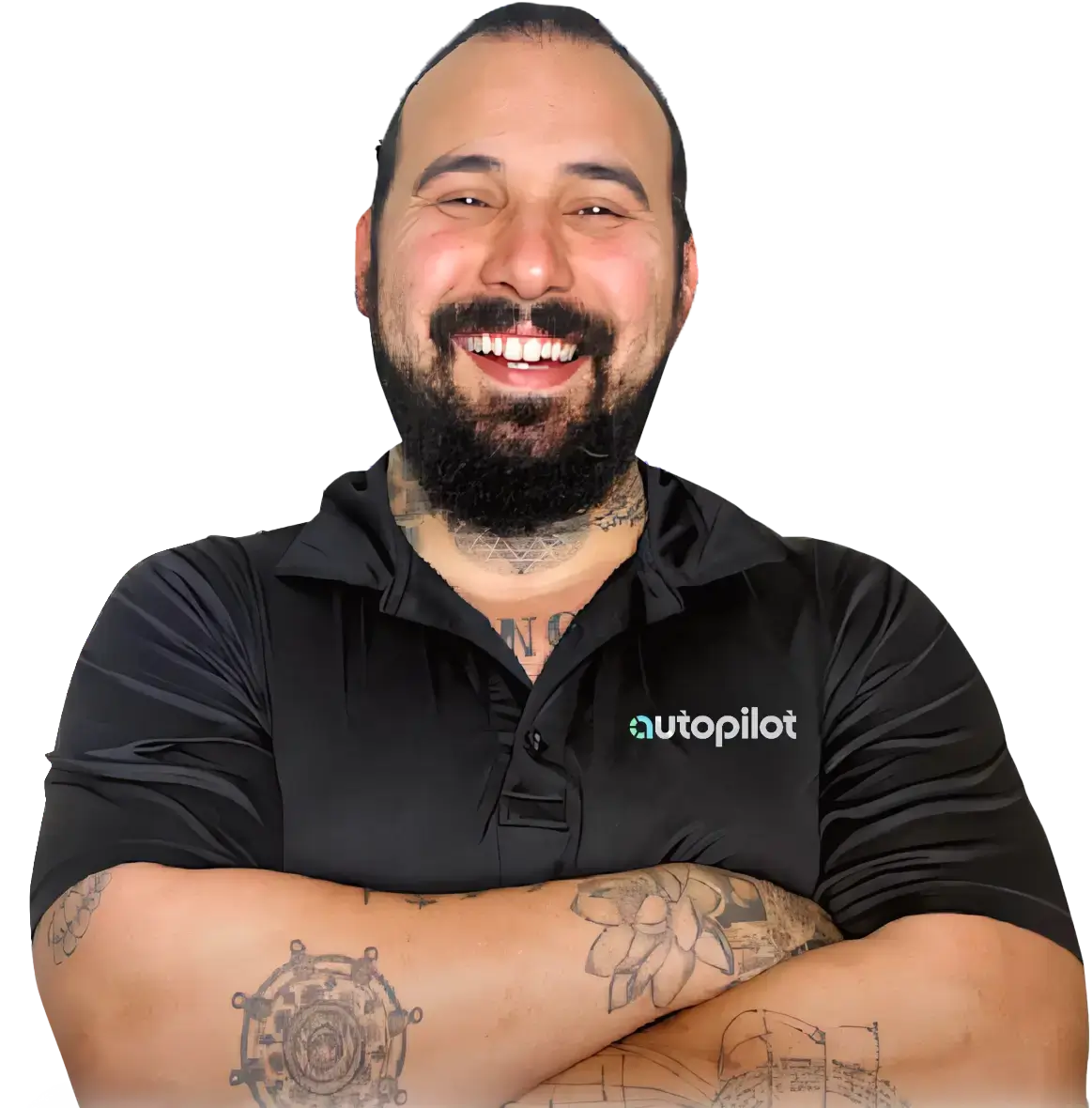
Andrew Thompson

He built the business, lived the mess, and coded the system he wished he had.

Andrew can teach the headline wins because he earned them. He can teach the harder parts because he published those too: the broken trucks, the expensive growth, the people mistakes, the profit hiding underneath the revenue, and the systems that finally gave the owner room to breathe.

Andrew Thompson, founder of Autopilot and former junk removal operator
Autopilot • Former Jedi Junk Removal operatorCoder, former junk removal operator, and founder of Autopilot
247long-form videos reviewed to build this story
$1.059Mreported revenue in the 2022 operating year
3 trucksacross the multi-location operation
$225Ksale after two years and four months in junk removal

He did not inherit a playbook. He kept building one.

Across 247 long-form videos, the same pattern keeps surfacing. Andrew gets close enough to a problem to feel its sharp edges, learns it obsessively, then turns what he learned into a tool someone else can use. Junk removal was not his first reinvention. It was the one that finally joined the coder, the operator, and the teacher in the same person.

01

Before the truck

A kid with a computer, a single mom, and no map for what came next.

Andrew grew up in a small Colorado town with a single mother. Around age eleven, a computer opened a door that his surroundings could not. He became consumed by websites and code, left high school at seventeen, and learned to make his own opportunities on the internet. At eighteen, a Google check for roughly $180,000 arrived. By nineteen, he says his websites had generated more than $2 million.

Then came the part most entrepreneurial origin stories edit out. He spent too freely, watched momentum disappear, and lived through a foreclosure and short sale. Later ventures produced another run of money and another education in what revenue cannot fix. Across dozens of websites and at least eighteen startup attempts, there were real wins, expensive failures, and a growing realization: being able to create demand is not the same as building something durable.

02

The restart

When the venture-backed dream died, a rented box truck became the next move.

Before junk removal, Andrew poured himself into Gypsy, a travel app he believed could become the next chapter. He had raised about $150,000 and was preparing for launch when COVID shut travel down. The product lost its moment almost overnight. At home were two young children, including a newborn, a partner counting on him, and savings moving in the wrong direction.

A friend showed him the junk-removal model. The partnership they discussed never materialized, so Andrew launched alone. The first truck was a rented fourteen-foot box truck with roughly 270,000 miles. Its transmission failed. There was no glamorous launch sequence, only signs, shirts, business cards, lead platforms, Google, Craigslist, and a willingness to answer the phone and do the work. The software engineer who had built digital products was suddenly learning disposal costs, estimates, routing, truck capacity, and what a customer's trust feels like at the front door.

03

The climb and the cost

The numbers became impressive. The truth underneath them became more useful.

The early progression was fast: roughly $10,000, then $15,000, then months in the $20,000s, followed by a month around $43,000. Andrew pushed paid acquisition hard, added trucks and people, moved off the truck in about six months and off the phones a few months later, and eventually built a three-truck, multi-location operation. Jedi Junk Removal reported about $1.059 million in revenue in 2022.

Andrew also published the math that makes the headline honest. He reported spending roughly $304,000 on advertising that year. Labor, landfill fees, fuel, equipment, repairs, and the cost of scaling took their share. A rough operating-profit calculation looked healthy, but truck purchases and maintenance brought his own take-home closer to barely six figures. The business had a million-dollar year. It did not hand him a million-dollar life.

That distinction is central to how he coaches. He understands why an owner turns up ad spend, why the phone can feel like oxygen, and why a full calendar can still produce a cash problem. He learned to ask a better question than 'How big is the revenue?' The better question is 'What did the machine require from you to create it?'

04

From chaos to a system

He sold the trucks. He kept the problems worth solving.

The operation forced Andrew to confront the parts of business that code alone cannot solve. Trucks failed. Tools disappeared. Employees needed standards, not wishes. Andrew says a former operations manager caused roughly $10,000 in losses across missing tools and devices plus unauthorized card charges. Each painful episode exposed another place where a process, permission, checklist, number, or accountability loop should have existed.

After two years and four months, Andrew sold Jedi Junk Removal for $225,000. The price was lower than the headline valuation he once imagined, in part because the company had a short tax history and buyers struggled to finance it. He documented the due diligence, broker fees, asset transfer, and closing friction so other owners could build with the exit in mind much earlier than he did.

Then he returned to the craft that had been waiting underneath the whole story. He began building Autopilot around the operating gaps he had lived: fragmented tools, missed calls, disconnected follow-up, scheduling friction, payment workflows, reporting, and the endless copy-and-paste work that steals an owner's attention. Today he teaches from both sides of the screen. He knows what the software should do because he remembers the day the truck broke, the phone kept ringing, and the business still had to move.

What most growth stories leave out

Revenue is a scoreboard. Freedom is an operating design.

Andrew is valuable in a coaching room because he does not confuse attention with achievement. He has shown the big revenue months, then opened the books and shown the ad bill. He has celebrated getting off the truck, then explained the systems and people required to stay off it. He has sold a business, then described exactly why the valuation was not what an optimistic owner might expect.

That honesty changes the questions. Instead of chasing a screenshot, members can work on the machine: profitable demand, clean numbers, repeatable service, trained people, useful automation, documented processes, and an asset that can operate without consuming the person who built it.

One mind across the whole operating chain.

Most coaches see one slice of the company. Andrew connects acquisition, sales, operations, software, AI, financial reality, and owner leverage because he has personally moved through each layer.

01

Practical AI for an actual home-service company

Use AI to turn tribal knowledge into SOPs, follow-up, calculators, dashboards, training assets, customer communication, and small internal tools. The goal is not novelty. It is removing friction without automating away the judgment customers and crews still need from a human.

02

Lead generation with the economics attached

Andrew grew through Google, local-service channels, Yelp, Thumbtack, Craigslist, Facebook, and community reputation. He can help an owner connect cost per lead to booking, close rate, average ticket, gross margin, and capacity before simply spending more.

03

Systems that get the owner off the truck and the phone

Build the handoffs, call standards, scheduling logic, role clarity, checklists, reporting, and accountability needed for the company to keep its promises when the owner is not touching every job.

04

The real math behind growth

Separate top-line excitement from cash, profit, equipment obligations, labor, disposal, and owner compensation. Andrew's own financial breakdowns make this a working session, not a motivational speech.

05

Building an asset instead of another job

Think earlier about clean financials, customer ownership, documented workflows, leadership depth, software access, transferable assets, and the evidence a future buyer will require. Even an owner who never sells benefits from a business built to be sellable.

Six months of live access

Bring the messy version. Build the usable version.

Andrew's live sessions are designed for the owner who has twenty ideas, seven disconnected tools, and one problem that keeps stealing the week. Members work toward something they can use, measure, and improve.
  • Map one recurring bottleneck into a clear workflow before choosing a tool.
  • Turn a useful AI conversation into a repeatable asset for the team.
  • Pressure-test marketing against close rate, margin, capacity, and cash flow.
  • Identify where the owner is still the only system holding the company together.
  • Leave with a concrete build, decision, or operating experiment for the next month.

Watch, read, and hear more from Andrew.

This profile was built from first-person interviews, public business material, and the work Andrew has shared in the field.

Meet the rest of your Grand Slam coaching team.

Five mentors. Thirty live classes. One complete growth system.

Put this much hard-won experience in your corner.

Meet with the team, see whether the program fits your business, and leave with a clearer picture of what comes next.