Table of contents
- Do Facebook ads work for junk removal? My actual numbers
- Facebook leads are not Google leads
- The $15 a day starter setup
- Creative that works: show the junk
- Follow-up is the whole ballgame
- The $11,500 hoarder house that paid for everything
- Split tests worth running
- FAQ: junk removal Facebook ads
- Answer every lead like it is $11,500
Over six months I spent about $4,500 on junk removal Facebook ads and tracked somewhere between $14,000 and $16,000 in revenue back from them. Call it roughly a 3x return. One of those leads turned into an $11,500 hoarder house cleanout, the biggest hoarder job I had done at that point.
And here is the confession that makes this post useful: I left money on the table. I believe that same campaign could have returned 4x, 5x, maybe 6x, because for the first few months I was sloppy with follow-up. Sometimes I did not respond to Messenger leads at all. The ads did their job. I fumbled mine.
That is the real lesson of Facebook for junk removal. The clicks are cheap. The leads are real. The money is made or lost in what happens after someone raises their hand. I filmed the whole results breakdown if you want the numbers on screen: my junk removal Facebook ads made $15,000. Here is the setup worth copying.
Do Facebook ads work for junk removal? My actual numbers
Short answer: yes, with a system behind them. My six month test: about $4,500 in spend, about $14,000 in revenue tracked to Facebook in my job source reports, and probably another $1,000 to $2,000 that never got tagged properly. That is around 3x return on ad spend, from a channel I was actively neglecting for months.
Compare the channels honestly, though. Google Ads produced far more revenue for me because search traffic is people who need a couch gone this week. Facebook is slower money and cheaper leads. Neither replaces the other, they are two layers of the bigger stack I laid out in my junk removal leads playbook, and if you are choosing which paid channel to learn first, Facebook costs a lot less to get wrong. My junk removal Google Ads guide covers the bigger, meaner channel when you are ready.
Facebook leads are not Google leads
Every complaint I hear about Facebook ads comes from treating a scroller like a searcher. Someone on Google typed junk removal near me. They have a problem right now. Someone on Facebook was looking at their nephew's birthday photos and your truck interrupted them. They have a garage that has bugged them for two years, no deadline, and no urgency.
So Facebook leads behave differently:
- They convert in days, weeks, sometimes months, not minutes
- They respond to reminders, nudges, and the occasional discount
- They go cold instantly if you reply slowly
- They ask price questions with zero context and disappear if the answer confuses them
That last one bit me directly. I ran copy with junk removal from $125 on it, and people read it as everything costs $125. If you advertise a price, make starting at impossible to miss. None of this makes Facebook leads bad. It makes them a nurture channel, and most junk removal companies have no nurture muscle at all, which is why the channel gets blamed.
The $15 a day starter setup
You do not need a big budget to start. I tell new operators to open with about $15 a day, which is enough for Facebook to find people and cheap enough to run while you learn.
The starter recipe:
- Run lead form campaigns first. The form pre-fills the person's name and contact info inside Facebook, and the small extra friction filters out some tire kickers.
- Target broadly: your service area, sensible age range, and not much else. Hyper-narrow targeting raises costs before you have data that justifies it.
- Connect the lead form to an instant text-back, so every lead gets a message within a minute. This is the single highest-impact piece of the whole setup.
- Drop every lead into an automated follow-up sequence: next day, a few days later, a week later. Casual and human, not corporate.
- Know your average job size before judging results. Monthly sales divided by number of jobs. Mine was about $550, so a $10 lead that closes even occasionally is a bargain. Judge cost per lead against that number, not against your gut.
Give the test a real window. A month of $15 a day is around $450, which is one decent job. You are not risking the business, you are buying data.
Creative that works: show the junk
My best performing ad was a family photo. It generated 181 messages at about $3.83 per conversation, which sounds incredible until you read the messages. A chunk of those people clicked because they liked the photo, not because they had junk. Cheap conversations are not the goal. Booked jobs are.
So here is where I landed on creative after testing family photos, team photos, plain junk piles, and video:
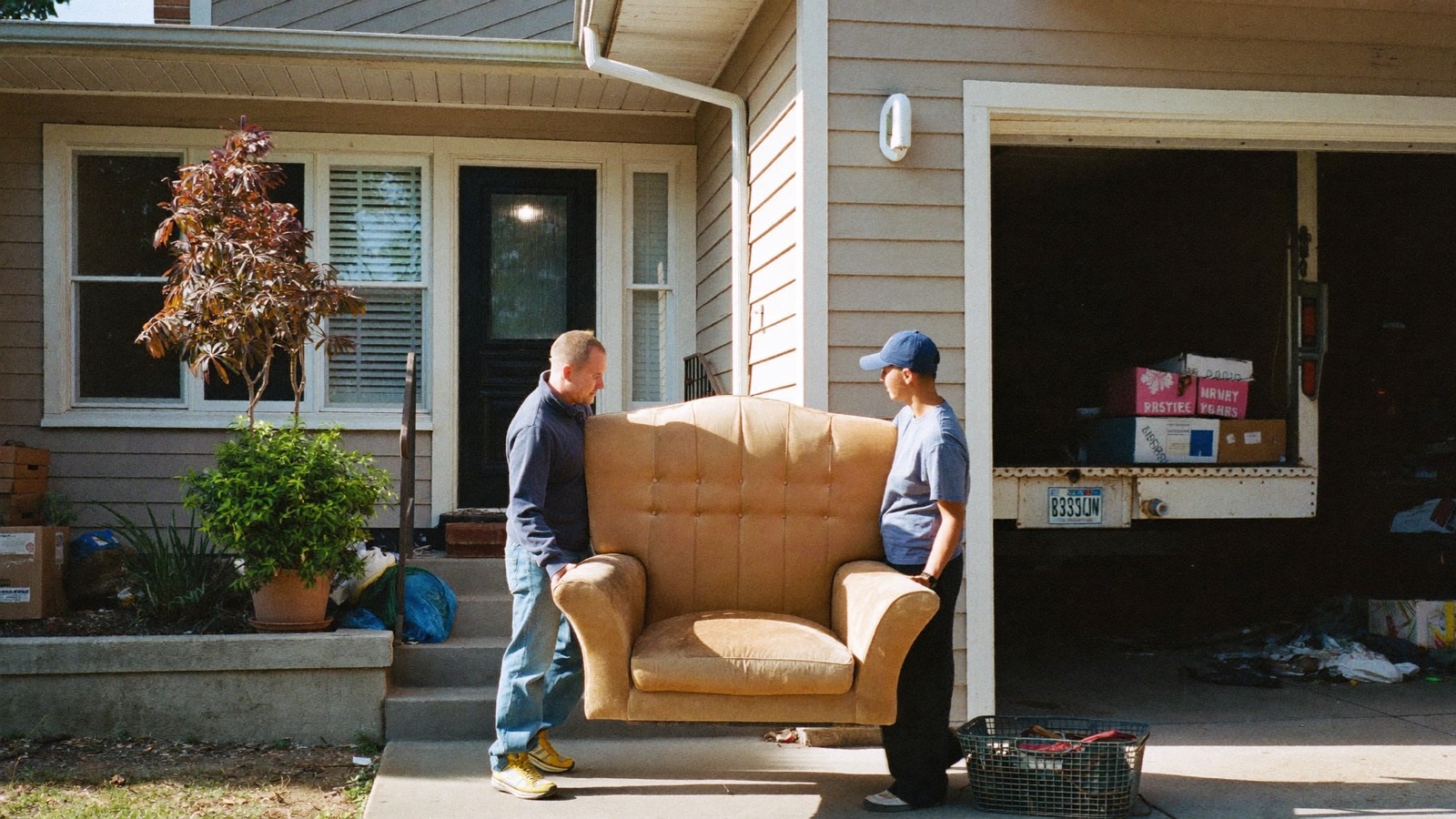
- Friendly and personal works, but the service has to be obvious. The winning frame is your real crew loading real junk into a real truck.
- Simple beats produced. A phone photo of a full driveway pile outperforms polished agency video. People scroll past ads that look like ads.
- Your personal profile is part of the campaign. Before you spend a dollar, fix your own Facebook: professional photo, cover image with the truck, a clear intro that says what you do. People click the name behind the ad, and the owner is the trust signal.
- Write the offer like you would say it on the phone. If it can be misread, it will be.
Rotate two or three creatives at a time, kill the losers, and feed the winners. Nothing fancier than that until the budget grows.
Follow-up is the whole ballgame
I want to beat on this because it is where my own money leaked. For months I let Messenger leads sit. People messaged a working junk removal company asking about junk removal, and nobody answered them. When I finally added automation and discipline, the same ad spend produced visibly more booked work.
The machine you want:
- Instant reply the moment a lead form or message arrives, even if it is just a text that says thanks, a real person is on this, what city are you in
- A next-day follow-up if they went quiet
- Check-ins over the following weeks, because Facebook people buy on their timeline, not yours
- An occasional nudge with a reason to act, like a slow-day discount
This is exactly what automated texts exist for, and the same instant text-back should fire on your website lead capture form too, because a form fill that waits an hour is a lead your competitor already called back. The operators who win on Facebook are rarely better at ads. They are better at answering.
The $11,500 hoarder house that paid for everything
The biggest single result from my Facebook testing was an $11,500 hoarder house cleanout. One bedroom was packed chest-high, with the resident literally walking on top of the material. Multiple truckloads, buckets for the loose stuff, rat holes in the walls. I have handled dirtier jobs, including a meth house, but never a fuller one. I filmed the walkthrough here: the $11,500 hoarder house from Facebook ads.
The business lesson is in the timeline. That lead did not book from the ad. It took one to two months of nurturing before it converted. If I judged Facebook the way most operators do, by what booked this week, I would have killed the campaign long before the whale landed.
Judge the channel on total return over months. One big job can cover a quarter of ad spend by itself, with the small jobs along the way as gravy. And when a hoarder job does land, price it and staff it properly. I wrote up how in my hoarder house cleanouts guide.
Split tests worth running
Once the starter setup is live, test one variable at a time with small budgets:
| Test | Option A | Option B | What I found |
|---|---|---|---|
| Lead type | Lead forms | Messenger ads | Messenger brings more leads with less friction, forms bring fewer but more qualified |
| Creative | Family or crew photo | Junk pile or loading shot | Personal photos pull clicks, junk in frame pulls buyers |
| Format | Photo | Video | Simple real footage holds its own against produced video |
| Targeting | Broad local | Narrowed interests | Broad is cheaper per lead but noisier, narrow costs more per lead |
There is no permanent winner. Facebook creative wears out, seasons change, and your market is not mine. The point of the table is the method: never run one ad and call the channel good or bad based on it.
FAQ: junk removal Facebook ads
How much should a junk removal company spend on Facebook ads?
Start around $15 a day. That is enough for Facebook to optimize and cheap enough to survive your learning curve. Scale only after you have a follow-up system that answers every lead within a minute and you know your cost per booked job, not just cost per lead.
Are Facebook lead forms or Messenger ads better?
I tested both. Messenger ads generate more conversations because the friction is nearly zero, but you inherit more curiosity clicks. Lead forms produce fewer, higher-intent leads with contact info attached. If you have automation piping every lead into instant texts, run forms first. If you personally like chatting, Messenger works.
Why are my Facebook leads not booking jobs?
Usually the leads are fine and the follow-up is broken. Facebook users are scrollers, not searchers, so they need an instant response plus days or weeks of nurturing. Slow replies, one-touch follow-up, and confusing price copy kill more Facebook campaigns than targeting ever does.
Should I run Facebook ads or Google Ads first?
Facebook first for most new operators. It costs a fraction of Google to test, and the mistakes are cheaper. Google Ads converts higher intent traffic and scales bigger, but it punishes thin budgets and weak tracking. I started on Facebook at low spend, built systems, then put serious money into Google.
Answer every lead like it is $11,500
Somewhere in your next hundred Facebook leads is a monster job, and it will go to whoever responds first and follows up longest. Autopilot plans start at $49 a month, with the shared texting inbox on Grow at $119 and automated marketing sequences on Scale at $299. Start a free trial or look at the full pricing breakdown.
Find more Autopilot guides on Google
Add Autopilot as a preferred source to see more of our latest advice in Google Search and AI results.