Table of contents
- Why the Money Is Made On Site, Not On the Phone
- Walk the Property: The Ask That Grows Every Ticket
- Single Items Are Door Openers, Not Profit Centers
- Price Anchoring With a Laminated Sheet
- Bundle the Minimum
- Rebid When the Scope Grows
- Upsells and Tips Rise Together
- FAQ: Junk Removal Upsells
- Make every job worth more
One Monday, with a single truck running, my company cashed out $6,705 in sales plus a $534 tip, and rolled another $2,400 of already-sold work into the next morning. None of that came from extra ad spend or a lucky lead. It came from what happened after we arrived: rebidding a job whose scope had doubled, filling the truck smarter, and asking the right questions while standing on the property.
That is the part of this business most owners ignore. Everyone obsesses over lead cost. Almost nobody works on the junk removal upsell, which is the cheapest revenue you will ever earn because the customer is already booked, the truck is already parked, and the trust is already built.
This playbook covers the walk-the-property ask, why single items are door openers instead of profit centers, how a laminated pricing sheet anchors bigger tickets, and when to rebid a job on the spot. Steal all of it.
Why the Money Is Made On Site, Not On the Phone
A phone call books the job. The driveway prices it. That is not a bug, it is the structure of junk removal: you cannot accurately quote junk you have not seen, which means the real sales conversation happens in person, with the customer standing next to the pile.
Think about what that moment contains. The customer has already decided to spend money today. Your crew is already there, so the marginal cost of hauling more is small. And the customer is looking at their garage thinking about all the other stuff they have been meaning to deal with. Every ingredient of an easy sale is present, and most crews just load the couch they came for and drive away.
The upsell is not a trick. It is finishing the sale the phone call started, and it starts with pricing structure. If you have not nailed volume-based pricing yet, read my full system on how to price junk removal jobs first, because upsells anchor off those tiers.
Walk the Property: The Ask That Grows Every Ticket
Here is the discipline I trained into every crew: never quote from the doorway. Walk the job with the customer. Confirm exactly what goes and what stays. Then, before writing the number, ask the simple question: is there anything else you want gone while we are here?
That question costs nothing and hits constantly. The garage leads to the side yard. The side yard leads to the shed. A one-couch pickup becomes a quarter load, a quarter load becomes a half. The customer was not hiding this junk from you. They just did not think to mention it on the phone, because on the phone they were price-anxious and now they are relieved you seem like professionals.
While you walk, you are also spotting the overage conversation you need to have up front: stairs, long carries, elevators, heavy material like concrete or dirt, unsanitary items, anything that changes the price. Disclose every one of those before loading, never after. Surprise fees kill reviews and referrals. Disclosed fees are just professional pricing.
Single Items Are Door Openers, Not Profit Centers
Now the math that changes how you see small jobs. When 1-800-GOT-JUNK ran a $59 mattress promo, half the industry panicked about competing with it. They missed the point: it was a deliberate loss leader designed to buy customers, not profit.
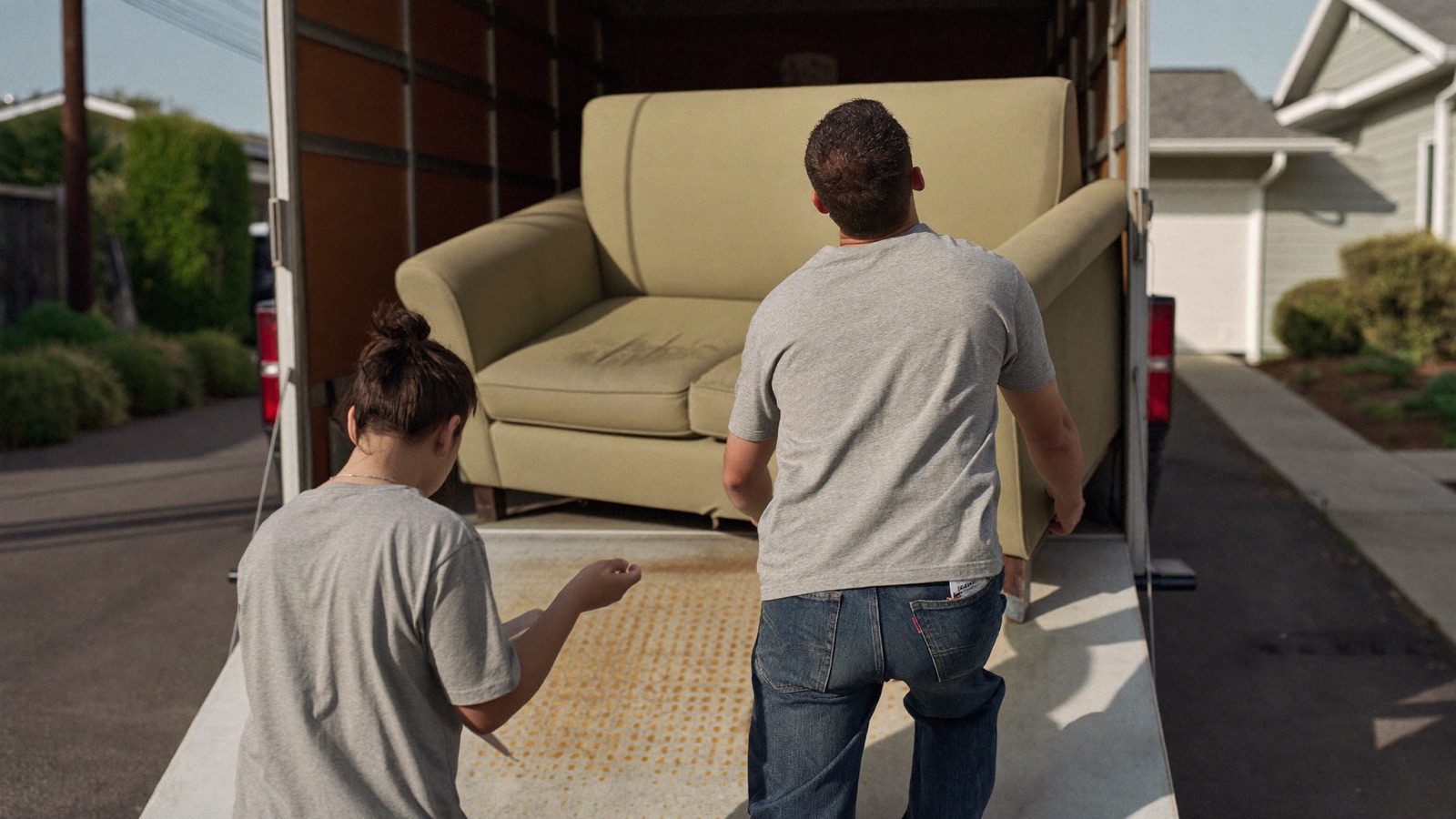
I lived this math in Los Angeles. A Google Ads call or form cost me about $55, and I closed around half of them, so my real acquisition cost was about $110 per customer. Send two employees across town for a $150 to $200 single item, add drive time, gas, and dump fees, and that job breaks even at best. Meanwhile a solo owner-operator with a free organic lead makes decent money on the identical mattress. Same job, opposite outcome, all acquisition cost and labor.
So the single item is not the prize. It is the door opening. Once you are standing in that customer's driveway, the job has to produce something beyond the invoice:
- The add-on ask that grows the ticket on the spot
- A customer captured in your client database for rebooking later
- A review request the same day
- A branded truck parked visibly on the street
- Neighbors who now know a junk truck was on the block
If a cheap single-item job produces none of those, it really did lose money. If it produces two or three, it was marketing you got paid for. I made a full video breaking down the loss leader math: https://www.youtube.com/watch?v=3XuyXfx6Kmw
Price Anchoring With a Laminated Sheet
The strongest upsell tool I ever used cost a few dollars at an office store: a professional pricing sheet, printed, laminated, and carried on a clipboard with proof of insurance behind it.
The sheet does three jobs. First, it anchors. When the customer sees the full menu, minimum up through full load, your quote reads as a position on a professional scale instead of a number you invented in their driveway. Second, it builds trust: printed prices feel fair because they are clearly the same for everyone. Third, it disciplines your own crew, because nobody can lowball a job when the menu is laminated.
My structure included 30 minutes of labor per quarter load, so a half load carried an hour and a full load carried two. Past that, extra labor gets charged per worker per hour, and the extra-fee menu covers stairs, long carries, elevators, unsanitary conditions, heavy material, and bagging loose junk. Here is what that looks like on a real job: a full load at $1,195 that takes four hours because items are scattered through the house becomes $1,195 plus $200 extra labor plus $50 bagging, or $1,445 total. Every line of that is on the sheet, pointed to, and agreed before loading.
Keep the same menu in your software so the field quote, the estimate, and the invoice always match. That is exactly what a price book is for, and it is how you make sure the newest crew member prices a job the same way you would.
Bundle the Minimum
The minimum charge is a built-in upsell most operators waste. My framing on the phone and in person: the minimum covers up to about a sofa or fridge worth of truck space, so if you have anything else, add it and get your money's worth.
Customers love this. It reframes the minimum from a fee into a budget they should spend. The mattress customer starts adding boxes, the fridge customer remembers the busted microwave, and your minimum job quietly climbs a tier or two. You are not squeezing anyone. You are giving them permission to hand you more junk at a price they already accepted.
Rebid When the Scope Grows
Some of the biggest single-day swings in my business came from having the spine to rebid mid-job.
Real example: we sold a commercial container removal at $1,600 based on an expected 19 containers. When the crew arrived, there were 39. We did not grind through and eat the loss, and we did not walk. We renegotiated with the customer to roughly $3,100 and everyone left happy, because the price still solved their problem and the math still worked for us. Scope changed, so the price changed. Say that sentence out loud and it stops feeling awkward.
The same discipline works in reverse: know when to decline. That same week, a customer wanted another $800 of heavy construction debris hauled after we had already honored a discounted $795 load the day before. Dump fees on heavy debris would have turned it into a money loser, so we walked away politely. Saying no to a losing job is a profit decision exactly like an upsell is.
And on big multi-load cleanouts, sell the whole scope even if you cannot finish today. That Monday ended with a five-truckload cleanout quoted at $5,975. We completed three loads before dark and landfill cutoffs, and rolled $2,400 of sold work to the next morning. Locked-in tomorrow revenue is the best kind.
Upsells and Tips Rise Together
Here is the pattern that surprised me: the days we upsold the most were also the days we got tipped the most. That $534 tip came on the last job of a day full of scope adds and rebids.
It makes sense when you think about it. The behaviors that grow tickets, walking the property, explaining pricing from a printed sheet, disclosing fees up front, moving fast, are the same behaviors that make customers feel taken care of. People do not tip because you charged less. They tip because you were professional and made a stressful thing easy. I wrote a whole post on how to double your tips if you want to push that lever harder.
Two pricing habits support the whole system. Bake taxes and card fees into your prices, then use "and there is no tax on top" as a savings point when a customer hesitates. And price high enough to absorb a 10 percent discount or a waived add-on fee, so your negotiation levers are planned instead of panicked.
FAQ: Junk Removal Upsells
How do I upsell junk removal jobs without being pushy?
Walk the property with the customer and ask one question: is there anything else you want gone while we are here? You are not pressuring anyone, you are offering to solve more of a problem they already have while the truck is already parked. The customer says yes or no and the job moves on either way.
Are single item junk removal jobs worth it?
They depend entirely on your lead cost and labor. With paid leads costing around $110 per customer and two employees on the truck, a $150 to $200 single item can break even or lose money. With free leads or a solo operation it can be solidly profitable. Either way, treat small jobs as door openers: add-on asks, reviews, database capture, and neighborhood visibility are the real return.
What extra fees should junk removal companies charge?
Common overage fees include stairs, long carries, elevator access, heavy materials like concrete and dirt, unsanitary items, bagging loose junk, and extra labor beyond what your load tiers include. The rule that keeps reviews safe: disclose every fee in person before anything gets loaded, ideally pointing to a printed pricing sheet.
What is a good average ticket for junk removal?
It varies by market, but the lever matters more than the benchmark: raising your average ticket through walk-the-property asks and minimum bundling is far cheaper than buying more leads. If your minimum is $150 and your full load is around $1,195, every tier a job climbs is nearly pure margin on the same drive time.
Make every job worth more
Upsells work best when your pricing, estimates, and invoices come from one system your crew follows. Autopilot plans start at $49 a month for one team member, with Grow at $119 covering up to five. Start a free trial or see the pricing and start growing the jobs you already have.
Find more Autopilot guides on Google
Add Autopilot as a preferred source to see more of our latest advice in Google Search and AI results.